Saturday, August 25, 2012

RIP Neil Armstrong


.
"Come down down down
From the moon Neil Armstrong
You've been up there too long
And it's time to come home"


Neil Armstrong,
astronaut, test pilot, Korean War vet, Purdue Boilermaker, baritone horn player, fellow Leo, and giant leaper of renown, died today at 82. On July 20, 1969 (two weeks before I was born), Armstrong became the first person to walk on the moon, uttering his now famous phrase, "That's one small step for man, one giant leap for mankind." I don't know what the best day of your life is, but I'm pretty sure Neil Armstrong has you beat. Beyond even the moon landing, his life and career is a litany of badassery. To wit:

On September 3, 1951, Armstrong flew armed reconnaissance over the primary transportation and storage facilities south of the village of Majon-ni, west of Wonsan (Korea); while he was making a low bombing run at about 350 mph, Armstrong's F9F Panther was hit by anti-aircraft fire. While trying to regain control, Armstrong collided with a pole at a height of about 20 feet, which sliced off an estimated 3 feet of the Panther's right wing. Armstrong was able to fly the plane back to friendly territory, but due to the loss of the aileron, ejection was his only safe option. He planned to eject over water and await rescue by Navy helicopters, and therefore flew to an airfield near Pohang, but his ejection seat was blown back over land. A jeep driven by a roommate from flight school picked Armstrong up; it is unknown what happened to the wreckage of No. 125122 F9F-2.

On March 22, 1956, Armstrong was in the right-hand seat of a B-29 Superfortress, which was to air-drop a Douglas Skyrocket D-558-2. In the left-hand seat was commander, Stan Butchart, flying the B-29. As they ascended to 30,000 feet, the #4 engine stopped and the propeller began windmilling (rotating freely) in the airstream. Hitting the switch that would stop the propeller's spinning, Butchart found the propeller slowed but then started spinning again, this time even faster than the other engines; if it spun too fast, it would break apart. Their aircraft needed to hold an airspeed of 210 mph to launch its Skyrocket payload, and the B-29 could not land with the Skyrocket still attached to its belly. Armstrong and Butchart brought the aircraft into a nose-down alignment to increase speed, then launched the Skyrocket. At the instant of launch, the #4 engine propeller disintegrated. Pieces of it damaged the #3 engine and hit the #2 engine. Butchart and Armstrong were forced to shut down the #3 engine, due to damage, and the #1 engine, due to the torque it created. They made a slow, circling descent from 30,000 feet using only the #2 engine, and landed safely.
.
Armstrong, 29, and X-15 #1 after a research flight in 1960.

On April 20, 1962, Armstrong tested a self-adjusting control system in an X-15. He flew to a height of 207,000 feet, (the highest he flew before Gemini 8), but he held the aircraft nose up too long during descent, and the X-15 bounced off the atmosphere back up to 140,000 feet. At that altitude, the atmosphere is so thin that aerodynamic surfaces have almost no effect. He flew past the landing field at Mach 3 (2,000 mph), over 100,000 feet altitude, and ended up 40 miles south of Edwards Air Force Base (legend has it that he flew as far as the Rose Bowl). After sufficient descent, he turned back toward the landing area, and barely managed to land without striking Joshua Tree at the south end. It was the longest X-15 flight in both time and distance.

On May 6, 1968, about 100 feet above the ground, Armstrong's controls started to degrade and the Lunar Landing Training Vehicle began banking. He ejected safely (later analysis suggested that if he had ejected 0.5 seconds later, his parachute would not have opened in time). His only injury was from biting his tongue.

In the fall of 1979, Armstrong was working at his farm near Lebanon, Ohio. As he jumped off of the back of his grain truck, his wedding ring caught in the wheel, tearing off the tip of his ring finger; he calmly collected the severed digit, packed it in ice, and had it reattached by microsurgeons at the Jewish Hospital in Louisville, Kentucky.

Neil Armstrong on Wikipedia

"The moon won't mind if you go
25 years have passed below
The moon won't mind if you go
25 years have passed below
And nobody knows"

Thursday, August 23, 2012

Weirdos History X

John Denney of The Weirdos, Slash Magazine #2
Photo: Melanie Nissen
.
The Weirdos were the most significant band of the early LA scene. This, following the theory that if New York punk was about art, and London punk about politics, LA punk was about pop culture, TV, and absurdity. The Weirdos had great songs, a great image, and a very good singer. The look was the most extreme of any band around.
--Greg Shaw, founder of Bomp! Records, We Got The Neutron Bomb: The Untold Story Of LA Punk, pp. 71-72


Weirdos - We Got The Neutron Bomb
Recorded Nov 1977
Available on Weird World - Volume One (1977-1981)
Available on DIY: We're Desperate - The L.A. Scene (1976-79)

The Weirdos' most well-known song and also the title of a must-read oral history of the early Los Angeles punk scene (buy on Amazon). I think they're described damn near perfectly in the first Dangerhouse comp: "Perhaps closest to the sounds of mainline English punk, they created the most convincing wall of distortion/sound of any LA band of the period. Where was the major label contact for these guys? Without a doubt, The Weirdos were the most creative and visually overwhelming band on the scene." In "Neutron Bomb" you can certainly hear the Sex Pistols and probably The Ramones, but I think you can also hear some Damned and Devo, two bands with whom they shared stages in those halcyon days of 1977-78.

Peter Case discovered The Weirdos. Who knows, maybe we would have stayed in our own private little world if he hadn't been so aggressive in talking us into playing out before we even had a completed lineup.
--John Denney, We Got The Neutron Bomb: The Untold Story Of LA Punk
, We Got The Neutron Bomb: The Untold Story Of LA Punk, p. 71

Weirdos - A Life Of Crime
Recorded Aug 16, 1977 (Elvis RIP)

Available on Weird World - Volume One (1977-1981)

Available on Destroy All Music


A buzzsaw punk anthem that sounds like a latter-day "Have Love, Will Travel" (The Sonics) as well as a template for Rocket From The Crypt. Cliff Roman's Vox guitar combines with Dix's leads and Dave Trout's bass to create a guitar tsunami, with John's vocal howl surfing on top of the madness. The Weirdos at the peak of their powers.


L-R: Dix Denney, John Denney, Dave Trout, Nickey Beat, Cliff Roman


They didn't even have a drummer, so at first they were saying, 'We can't do it.' Then we said, 'Fuck it, man. Just go play and you'll get a drummer. You don't need a fucking drummer. Just show up, you guys are like the greatest group in the world.' The Weirdos were fucking great. Those songs like 'A Life Of Crime,' 'Idle Life,' Hit Man' -- those are still great tunes.
--Peter Case
, We Got The Neutron Bomb: The Untold Story Of LA Punk, p. 70

Weirdos - Idle Life
Recorded 1979
Available on Destroy All Music

Gee, you think Kurt Cobain heard this track at some point? "Love Buzz" may have been a Shocking Blue cover, with the original hinting at proto-punkery, but "Idle Life" is unquestionably punk rock and it sounds astonishingly close to what Nirvana came up with in 1988. In that sense, it's the perfect Weirdos track. They were ahead of their time, musically and visually, the kind of band that record labels had no idea what to do with in the 1970s. Essentially, it took about a decade for t
he music industry to catch up to the early LA punks, if not all punk.

There's no place to hide, I'm stuck in my brain

You might think this post was inspired by my previous post on Thelonious Monster. After all, guitarist Dix Denney was a founding member of both the Monster and The Weirdos, and his brother John, pictured up top, was the band's singer and fellow co-founder. I suppose on some level that has to be true. But, I also think this is one of those creepy Twilight Zone things where The Weirdos were floating in the cultural ether and I tapped into their frequency. In fact, the reason I'm writing about The Weirdos is because I was watching American History X for the first time the other night. (I know, I know, where the hell have I been?) Anyway, while watching AHX I noticed a distinctive, yet almost unbelievable piece of set design. On Edward Furlong's bedroom wall, set amidst the happy funtime Nazi propaganda, was a picture of John Denney from The Weirdos. Specifically, a poster for the band's Destroy All Music 7", and featuring the classic Denney pic used for the cover of Slash Magazine (top of the page). Don't remember this in the film? Check it, foos.
.

"Maybe this Nazi shit IS masking deeper psychological issues."
.
My first thought was, "Is that John Denney?!?!" My second thought was, "Why is that awesome picture of JD being used in a movie about white supremacy???" Keep in mind, The Weirdos weren't the type to adorn themselves in Nazi iconography and are kind of obviously not purveyors of the national socialist ethos. And from a purely visual standpoint, The Weirdos didn't need iron crosses and swastikas. I like how they're described in the
Destroy All Music reissue: "Deconstructed thrift-store day-glow abstract expressionist rockabilly chic." Essentially, they were walking Pollocks who didn't need the distracting silliness and fake rebellion of Nazi symbolism.

Which brings me back to the why? Why was this picture used? If the poster was included because John Denney's disturbing appearance mirrors the confusion and alienation of a Venice kid fucked up on white supremacy, job well done. But, with me living in Los Angeles, I can't help but feel there's some homegrown subversion at play. Was one of the set designers on American History X a secret Weirdos fan and included the poster as a nod to one of LA's great, underappreciated punk bands? Nothing ends up in a movie by accident, for no other reason than rights need to be cleared. So, there's a story here somewhere. If you can solve this mystery, please write in. I'd love to hear how The Weirdos very subtly infiltrated this excellent, brutal masterpiece.

We was good friends for a long, long time
But, baby you got hungry for a life of crime
Get the message now?!?!

Saturday, August 11, 2012

Thelonious Monster: A 12-Step Program

Thelonious Monster L-R:
Pete Weiss, Chris Handsome, Bob Forrest, Dix Denney, Mike Martt

And so it came to pass that on July 18, 2012, I finally bore witness to Keirda Bahruth's excellent Bob Forrest documentary,
Bob And The Monster, at the Crawford Family Forum in Pasadena. It was well done, deftly mixing interviews, extant footage, and animation sequences. The narrative didn't linger too long on any one part of the chronology, but had a consistent forward momentum, even when looking to Bob's mostly troubled past.

Granted, Bob And The Monster was tailored for a longtime Thelonious Monster fan like myself. But, I started thinking about other members of the audience. What if you liked the documentary, but weren't familiar with Thelonious Monster? Or, what if
you haven't seen the documentary yet, but were interested in Bob and the band just by reputation or curiosity? Duh. You'd come here to the Adios Lounge and check your head.

I originally had this playlist at 26 songs, whittled it down to 20, then realized that the idea of 12 steps was too easy to pass up. Look at these dozen songs as a concise overview of Thelonious Monster's strengths and appeal. In fact, I organized the 12 songs so that they tell the narrative arc of a character -- let's call him "Bob Forrest" -- who starts out as a insufferably charming genius, sabotages his own life with drugs and poor decisions, and then slowly rebuilds his life through honest self-examination.

I limited my selections to the first four albums and ended it with "See That My Grave Is Kept Clean" because it was the traditional climax to their sets, and also because there were no guarantees in 1992, when the last of these songs was released, that this character "Bob Forrest" would survive. But, survive he did and musically speaking, here are twelve reasons why that matters


1. Thelonious Monster - Psychofuckindelic (Forrest/Huck)
Baby, You're Bumming My Life Out In A Supreme Fashion, 1986

Vocals - Bob Forrest
Guitar - Dix Denney, Chris Handsome, Bill Stobaugh, K.K. Barrett
Bass - Jon Huck
Drums - Pete Weiss

The first song on their first album, "Psychofuckindelic" was usually played at the beginning of their shows, if not as the opener. (Chris Carey, please correct me if I'm misremembering this). Can't say that I blame the band. This is a stone cold groove that gives them a chance to warm up for a 60-90 minute set. Pete Weiss' giddyup drums and Jon Huck's shifty bass remind me of the Minutemen, but with Dix Denney's patented squalls of Hendrix wah-wah thrown in. Punk-funk can be dangerous territory, but the Monster negotiates it with aplomb. Bob Forrest's punk rock yowl complements the words, a fuck you hatefest of a piece with other Monster songs like "... And The Rest Of The Band," "Real Kinda Hatred," and "Politically Correct Girl From The Valley." Which is to say, our protagonist may have encouraged unhealthy relationships.


Baby, You're Bumming My Life Out In A Supreme Fashion, 1986
Painting: Fred Brathwaite (aka Fab Five Freddy)

2. Thelonious Monster - Swan Song (Handsome, Denney, Forrest)
Next Saturday Afternoon, 1987

Vocals - Bob Forrest
Guitar - Dix Denney, Chris Handsome
Bass - Jon Huck
Drums - Pete Weiss


Inspired by Anthony "The Swan" Kiedis of the
Red Hot Chili Peppers, "Swan Song" is both about drug addiction and the effect of drug addiction on loved ones. An obvious homage to Hendrix's "All Along The Watchtower," Dix's guitar anchors the song/tribute. Great, soulful vocal from Bob and I love Pete's off-kilter drumming. Bob also loves Pete's drumming, at least to a point.

"(Pete Weiss) plays pretty good for a guy that only touches drums at soundchecks and at gigs! He has his own personal style. He is the only drummer that listens to what I'm singing. You can tell by his drumming. When I start singing in 'Swan Song,' 'Oh, but you, you don't listen to no one,' it's a very emotional part. And Pete knows it. You can feel it in his drumming. Unfortunately, he doesn't practice enough to feel it and keep the beat steady. But, it's better than having a drum machine with hair."
--Bob Forrest to Bob Cantu, Flipside, 1992-93


It's true that Pete was never a metronome timekeeper, but I've seen Bob flub lyrics dozens of times. If this was Los Lobos, okay, we'd have issues. But Thelonious Monster? No one ever left a Monster show wowed by their precision craftsmanship and punctuality. So, for Bob to call out Pete in an interview he knew would get back to him -- for practice of all things, I mean, we talkin' 'bout PRACTICE! -- was kind of a dick move. Bob and Pete were perfect for each other, in that they were both musically undisciplined, but in complementary ways. I have to imagine that 20 years removed from that statement, even Bob would admit that despite his flaws, it wouldn't be Thelonious Monster without the Weissmaster.

This seems like a good time to mention that Swan Song was also the name of Led Zeppelin's vanity label in the 1970s, the same band namechecked in "Lookin' To The West" (Track 4 below). Furthermore, Zep's "Rock And Roll" made several Thelonious setlists in 1989, a song referenced in my recent post on The Roots of Levon Helm.

Next Saturday Afternoon, 1987

3. Thelonious Monster - Walk On Water (Huck/Forrest)
Next Saturday Afternoon, 1987

Vocals - Bob Forrest
Guitar - Dix Denney, Chris Handsome
, Bill Stobaugh
Bass - Jon Huck
Drums - Pete Weiss
Sax - Tree
Organ
- John Dentino

Another funky jam, "Walk On Water" was produced by Flea of the
Red Hot Chili Peppers. This tune was always a highlight at shows, partly because of lyrics, but partly because it's actually danceable -- if you call the drunken white guy head bob dancing. And I do. Between this, "Psychofuckindelic," and 7 other songwriting credits on Bumming My Life and Next Saturday Afternoon, I'm beginning to think Jon Huck was a more integral part of the early Monster than I was led to believe. Rob Graves, who replaced Huck, was probably their best fit on bass because he meshed best with Pete, but it's hard to overlook Huck's early contributions.
.

Lyrically, Bob's genius was turning Neil Young's "Don't Be Denied" on its head. Where Neil lamented being objectified by the business part of show ("a millionaire through a business man's eyes"), Bob embraced it. Who wouldn't like being told how good he is by journalists, labels, other musicians, scenesters, and blogs 25 years in the future? Who wouldn't like hearing that John Doe and Paul Westerberg are peers? Of course, the downside to believing the hype is that you invariably turn into an asshole. Thus, "Walk On Water" is one of the rare songs where the performer admits culpability in the fame process. Bob may have been an asshole, but at least he had the balls to admit it.

4. Thelonious Monster - Lookin' To The West (Weiss, Forrest)

Next Saturday Afternoon, 1987

Vocals - Bob Forrest
Guitar - Dix Denney, Chris Handsome
Bass - Jon Huck
Drums - Pete Weiss
Viola, double bass (?) - Tree

When I was a kid nothing mattered more
Than Kiss and Led Zeppelin singing rock and roll
Oh, singing rock and roll ("Rock And Roll"?)
Back then, music used to mean so much to me
It don't mean that much to me no more


The perfect bookend to "Walk On Water," "Lookin' To The West" is also about the music business, but in its traditional lament form. In fact, if we return to "Don't Be Denied," the lyrics above echo Neil's reference to sitting on the steps at school and dreaming of being stars. It's sadness at a time long gone, when you could enjoy music with childlike naivete, before your talent was co-opted by the entertainment-industrial complex. That's why Tree's viola is such a nice touch. It gives "Lookin'" an almost wistful country/folk feel that lends itself to the song's inherent nostalgia.

This business tears right at your soul
It'll turn you inside out
Flip you upside down
Take you all around
Til' you don't know you anymore

According to legend, Pete Weiss based his drum lick here on the drum part in "Mommy, Where's Daddy," which the Red Hot Chili Peppers recorded for their debut album in 1984*. Normally, this factoid would elicit a dismissive, "Who gives a shit?" from the peanut gallery. However, the RHCP drummer at the time was Cliff Martinez, who was in the band from 1983-86. Two years before joining the Peppers, Martinez was briefly in The Weirdos, the first LA punk band to play out live, in April 1977. Cliff played drums on their final demo session in 1981, after which they went on hiatus for 9 years. In 1990, The Weirdos released their underrated comeback album, Condor, and Martinez played synth on the title track.
.

* Thanks to reader Adam S for clearing up my confusion on this drum part. I mistakenly thought the origin was "Baby Appeal," but one listen to "Mommy" and it was obviously the inspirado.

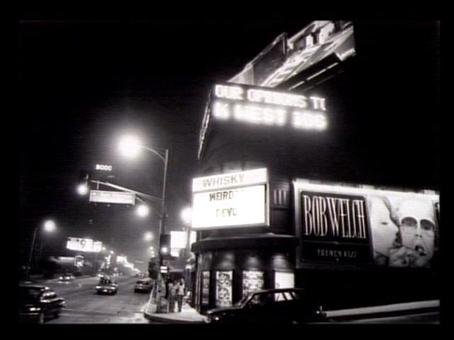
Weirdos & Devo at the Whisky a Go Go
October 16, 1977
.
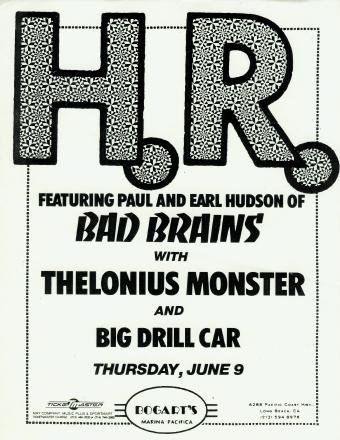
Why does this backstory matter? Because the guitar player who co-founded
The Weirdos and brought Martinez into the band was none other than the Monster's own Dix Denney, who started The Weirdos with his brother/singer, John. In fact, when the group disbanded in '81, Dix brought Cliff with him to play on Lydia Lunch's 13.13 project, released in 1982. That same year, Martinez also played drums on Ice Cream For Crow, the final studio album by one Captain Beefheart. Just a little LA punk rock history for y'all. You're welcome.

5. Thelonious Monster - Sammy Hagar Weekend (Forrest)

Stormy Weather, 1989

Vocals - Bob Forrest
Lead guitar - Dix Denney

Guitar - Mike Martt, Chris Handsome

Bass - Rob Graves
Drums - Pete Weiss


"I lived that song. I went to Anaheim Stadium when I was in high school to see what I thought was a great lineup: Hagar, Van Halen, Black Sabbath, and Boston. the show didn't start until Sunday, but we got there Friday night and waited in the parking lot. It was the first time I ever drank whiskey.

I'm trying to make fun of what we all thought was cool. It's also a hope we all grow up and find out how stupid it is to be like that. When I was 16, I thought cruising and boozing was what people did. So what did it get me? Two (DUIs). One of the themes of the new album is growing up and that song is part of that for me."
--Bob to Robert Hilburn, LA Times, 3/5/89

I wrote this for an October 2, 2010, Adios Lounge post and I think it's still pretty accurate:

"Sammy Hagar Weekend" is autobiography, disguised as satire, and wrapped in parody. Bob Forrest wrote it partly about his experience at a September 1978 über-concert in Anaheim, California ("Summer Fest"), featuring Boston, Black Sabbath, Van Halen, and the titular Hagar. However, the song also functions as a satire of the Heavy Metal Parking Lot culture. The parody comes at the end of the song, when the Monster transforms into full-on heavy metal band, with pro gear, pro attitude, sweet licks, and slaytanic backward masking.


Beautiful Mess, 1992

Vocals - Bob Forrest

Guitar - Dix Denney, Zander Schloss, Chris Handsome
Bass - Martyn LeNoble
Drums - Pete Weiss
Mandolin - Sam Bush
Piano/Producer - Al Kooper

Here it is finally, the blog's namesake tune. Combine one of my favorite bands ever with Tom Waits circa Bone Machine, mandolin from Sam Bush (at the time a member of Emmylou Harris' Nash Ramblers), and piano (and production) by the legendary Al Kooper. Not too shabby. Ironically, "Adios Lounge" wasn't written by Bob Forrest. In fact, the lyrics were written by an obscure songwriter named George Kuhn, the music was written by his son, Bob, and that's the extent of the Kuhn discography. Ain't that something? I actually saw Bob Kuhn play a brief set with Bob Forrest at either Raji's or English Acid (both clubs in LA) in 1991-92. I remember them doing "Adios Lounge" together and then Bob K sang 3-4 of his own numbers.

The song's evolution is an interesting story. Bob originally recorded "Adios Lounge" as a demo with Kooper in 1990-91, but he felt like it was missing something. That something was Tom Waits. Here's Bob with the rest: "I was so excited. I took the tape to RCA (with whom he was still signed) and played it for this A&R guy. He listens to it and goes, 'Maybe I just don't get it. You sing beautifully, and then this voice comes out of nowhere. Who is it? Is it Louis Armstrong?' I asked him if he had heard of Tom Waits before, and he said, 'Oh yeah, Tom Waits.' I said, 'You're a fucking idiot, aren't you?' And then my manager grabbed me and got me out of there fast." (Bill Holdship, BAM, November 13, 1992)

Say what you will about Bob Forrest, he's not just your average clown.

Stormy Weather, 1989

Stormy Weather, 1989

Vocals - Bob Forrest
Lead guitar - Dix Denney

Guitar - Mike Martt, Chris Handsome

Bass - Rob Graves
Drums - Pete Weiss


A classic Bob Forrest ballad, I have it on good authority that this was a smash hit in at least 8 different alternate timelines. That's science, bitches. One of my favorite critiques of this song comes from Bob himself. At a record release party for Stormy Weather (Go Boy Records, Redondo Beach), Bob compared "So What If I Did" to a Huey Lewis song, with its overt poppiness, and the seeming to go on forever (even though it's only 3:48). While this self-criticism is a bit harsh, it may be because the song was so tough to pull off live. Not sure why either, but I've seen the Monster probably 30 times and it seems like a guitar is always out of tune or someone fucks it up somehow. Which, I suppose, is appropriate given this song's unfortunate role in the band's history.


Bob Forrest testifying

"I thought we should make a video of 'Sammy Hagar Weekend' and the record company (Relativity) thought we should make a video of 'So What If I Did.' And I'm such a belligerent asshole, like I've said probably three times now, that I went on the radio and said what a bunch of assholes the people at Relativity were and they didn't know shit about music and they should listen to me and we should make
a video of 'Sammy Hagar Weekend,' that I couldn't wait to get away from Relativity and hoped they fucking dropped us.

And it happened to be that they were piping in the radio interview all through the building at Relativity, so that everyone could get familiar with the new band! I sat there just ragging on them for about a good hour. I thought they would take it as a joke, but they didn't. So they pulled all promotion and all help after that. And that's right when things were going good. They not only wanted to let us go, they wanted to destroy me because I had embarrassed them. So that's part of why we haven't made a record for four years. Relativity held us up and fucked us under. They also deleted Stormy Weather and Next Saturday Afternoon off their catalog. They won't sell it. You can't buy it anywhere. So I fucked up in that respect. And the heroin didn't help.
"
--Bob Forrest to Bob Cantu, Flipside, 1992-93


Thelonious Monster and Bob Forrest in a "what could've been" nutshell. They had talent, chemistry, songwriting, and connections, but they couldn't get out of their own way. Sure, Bob was the master of self-sabotage, but
the entire band was strung out on heroin. The one exception was guitarist, Chris Handsome, whose preferred mode of self-destruction was wine coolers. (Honestly, wine coolers vs heroin? I think I'd go with heroin.)

8. Thelonious Monster - Lena Horne Still Sings Stormy Weather (Forrest/Handsome)

Stormy Weather
, 1989

Vocals - Bob Forrest
Lead guitar - Dix Denney

Guitar - Mike Martt, Chris Handsome

Bass - Rob Graves
Drums - Pete Weiss


This is a slightly modified excerpt of a Star Maker Machine post I wrote in October 2008:

One of Bob Forrest's finest moments as a songwriter and one of Thelonious Monster's finest moments as a band, "Lena Horne" is essentially a folk song done as rootsy punk rock. Forrest's songwriting triumph -- especially in the context of both Reagan/Bush and post-punk's golden age when the song was released -- was in transcending a predictable vitriolic rant against "the system" to produce a compelling song of hope and belief.
.


There's no reason for the protagonist to feel hope, especially against a backdrop of depressing and destructive forward-thinking materialism. Two of Los Angeles' most distinctive googie-style coffeehouses, Ships and Tiny Naylor's (above), were torn down because that's what Los Angeles, and by extension, America, does. We don't preserve the village green. We raze it and open a Starbucks. We'll do just about anything to squeeze an extra dime, we'll probably even sell our own grandmothers.

And yet, the song's message remains one of perseverance and hope. Forrest doesn't say things are bad and getting worse. He says things are bad, but they could get better. We may be working our asses off and can't afford to pay our bills, maybe Ships and Tiny Naylor's were torn down, and maybe there are people who'll sell their own grandmothers. But, we have to believe they can get better and work and hope and pray and wish and give it our all.


Read full Star Maker Machine post


9. Thelonious Monster - Colorblind (T. Monster)

Stormy Weather, 1989

Vocals - Bob Forrest
Lead guitar - Dix Denney
Guitar - Mike Martt, Chris Handsome
Bass - Rob Graves
Drums - Pete Weiss


"Before I moved here (Huntington Beach), I lived in Inglewood with my mom and dad and we lived in these houses that all looked the same. Every house on the block looked exactly the same. It was an all-white area, there was no black people or Mexican people anywhere near this environment.  And in one house these black people moved in and it was such a tragic thing in our family. We couldn't live on the same block as black people. So, my dad put the house up for sale, we moved, and this is a song about that experience."
--Bob's intro to "Colorblind" at Pepper's Golden Bear, Huntington Beach, CA, February 7, 1991 (I, the HB resident home from Chico, was in attendance)


This is probably my favorite song about racism not involving Chuck D or Ice Cube. "Colorblind" is absolutely, dead-on
brilliant because it's clearly about racism, yet we're not lectured or spoon-fed an obvious setup. Instead of offering tired homilies, Bob shows us bigotry from the perspective of a 6-8 year old kid, pinpointing the exact moment when innocence was lost. The music is equally genius, an unlikely combination of early Lone Justice and Motown, Rob Graves' funky bassline and the intertwining guitars sound like Cadillacs doing about 95, bumper-to-bumper, rollin' side by side.

The houses all looked the same
Sometimes I'd even run into the Freeman's next door
Thinkin' it was ours
Those were my 
Marco Polo, Slip 'n' Sliding days
I can't remember if I was in the first or the second or the third grade

Ah, but then everything
Everything started to change

The Johnsons moved in down the street
I went to St. Augustine's with their son, Michael, we played ball
Then my dad and all the men from the neighborhood got together
Started drinking in the back of our house at the bar

I heard hatred
A hatred that I'd never heard
You could feel hatred
A hatred that I'd never felt

Oh, and what are you supposed to do
When you're so small?
They said it wasn't a question of race
It was just property values
They said it wasn't a question of race
We just have to move

We moved away as fast
As we could sell the house

We moved away as fast
As we could sell the house

10. Thelonious Monster - Blood Is Thicker Than Water (Forrest)
Beautiful Mess, 1992

Vocals, acoustic guitar - Bob Forrest
Guitar - Dix Denney, Zander Schloss, Chris Handsome
Bass - Martyn LeNoble
Drums - Pete Weiss
Backing vocals - Dan Murphy and David Pirner from Soul Asylum

I've always considered "Blood" a sequel to "Colorblind." That kid who was in the first or the second or the third grade is now 30-31 and has grown up with some bitterness and anger. While he may not be a racist, he smokes and drinks and yells at everyone, which is exactly what dad did. Ain't that thick blood a bitch? It's a kick in the nuts when you realize the apple has fallen right at the base of the tree. Someone get me some water.

Thelonious Monster -
Blood Is Thicker Than Water

.
This is actually the excised version of "Blood," the MTV remix sans acoustic intro. I'm not sure the video adds all that much to the song, but Thelonious videos are in short supply, so why not? I should've mentioned earlier, too, that one of the reasons this song harkens back to "Colorblind" is Dallas Don Burnet swinging a tight Motown groove on bass a la Rob Graves in '89.

Also, and the video only hints at this, the brief guitar solo here was usually an opportunity for Dix to do his thing. If I wasn't clear before, please pay attention now. Between The Weirdos and Thelonious Monster, Dix Denney is one of LA's great underground guitar heroes. He's got a totally distinctive sound, very distorted and visceral and all wah-wah up in your face, like a surf-punk Eddie Hazel.


Vocals - Bob Forrest
Guitar - Dix Denney, Chris Handsome, Bill Stobaugh, K.K. Barrett
Bass - Jon Huck
Drums - Pete Weiss

Probably Bob Forrest's first truly great song, "Try" is in some respects a simple slice-of-life story. But, Bob invests it with his unique songwriting voice, so you can feel the empty pockets, the hangover, the pathetic mom call, and the Fogerty envy.

And a beautiful girl at Canter's
They were lookin' so fine
And their lives were so together
And me I couldn't afford a cup of coffee
To kill my hangover
You know it made me think

Oh Lord, it made me think about everything

Thelonious Monster has so few videos, it's kinda funny that the two that are available are back to back here. Oh well, what can you do? Here's the Monster in their 1986 heyday and not only are these images in the Bob And The Monster documentary, but a lot of other era footage I never knew existed was used. Go see it if you can.

Thelonious Monster - Try


Vocals - Bob Forrest
Lead guitar - Dix Denney
Guitar - Mike Martt, Chris Handsome
Bass - Rob Graves
Drums - Pete Weiss

I've been writing this blog long enough that I almost can't remember not writing it. But, way back in April 2008 I jumpstarted The Adios Lounge and my second post was about this song. Written and recorded by Blind Lemon Jefferson in 1927-28, "See That My Grave Was Kept Clean" was covered by Bob Dylan in 1962, then covered by Thelonious Monster in 1989. I've always assumed that Bob Forrest got the song from Dylan, his favorite songwriter. However, now I'm thinking that Bob really got turned onto "Grave" via Dream Syndicate, LA's paisley Crazy Horse who covered the song on their 1988 LP, Ghost Stories, which was produced by longtime Neil Young associate, Elliot Mazer. Bob and Steve Wynn were good friends and it makes a lot more sense that he was turned onto "Grave" by his Angeleno compadres as opposed to simply hearing the Dylan cut somewhere along the line.

Whatever the inspiration, Thelonious' studio version turned Blind Lemon's meditative blues into a full-bore moshpit anthem. On stage, the song would often stretch out for 8-10 minutes,
an onslaught of guitars and Pete's driving beat, not unlike Jeffrey Lee Pierce and Gun Club. And where "Psychofuckindelic" was usually played early in the set, "See That My Grave Is Kept Clean" was usually played late, if not as the last song. Bob transformed "Grave" into a punk rock pentacostal, his testimonials of drug abuse and death floating above the haunting music. If any one song illustrated why Thelonious Monster had such a profound impact upon me, "Grave" was it. A killer cover delivered with brutal honesty, passion, balls, and no bullshit. What's not to like?

Download Thelonious Monster 12-Step Playlist (69 MB; 39:00)


Thelonious Monster on Amazon


L-R: Chris Handsome, Bob Forrest, Pete Weiss, Dix Denney
.
This Thing Called Thelonious Monster

"The funny thing is, I always thought you had to get drunk and take drugs to get into this performance stage mode. But, I've finally found out, after all these years, that the magic is in the music."
--Bob Forrest to Robert Hilburn, LA Times, November 7, 1993

Thursday, August 2, 2012

Devo Kickstarter

There must be spuds in the air.

After my previous Jerry Casale post extolling the virtues of Devo, I discovered that a filmmaker named Tony Pemberton is producing,
Are We Not Men?, an authorized documentary about Devo. It's actually a Kickstarter project with four days to go and it's currently at 250% of its goal. So, it's gonna get made. But, them copyrights are always a bitch and besides, it's Devo. Wouldn't it be rewarding to give a little something back to a band who ate shit for so long, and yet was proven right? Of course it would.


Visit Devo documentary Kickstarter page

Visit Devo documentary blog