Saturday, January 29, 2011

Mostly Just Turning Out Wrong

Soul Asylum in their prime

In 1990, Soul Asylum released my favorite album in their catalog, And The Horse They Rode In On. The band was in their prime, the songwriting was concise, clever, and perceptive, and they destroyed live. I feel lucky that I got to see them twice that year. The first time was in November at the Country Club in Reseda with Thelonious Monster opening (first time seeing both ... epic), and a month later at the Warfield in San Francisco, where they (sonic) reduced the headlining band into Pixie dust.

Little did I know that I was seeing two of the final shows in Soul Asylum's widely acknowledged 1986-90 peak. Within a few months of that SF gig, Pirner and Murphy were playing shows as a duo, more or less busking for labels with the band's future very much in doubt. Commercial success was still 18 months away. So, let's freeze-frame Soul Asylum in the fall of 1990, when they were a struggling bar band, but an absolute force of nature on stage.

Apologies in advance for any crappy audio.


Soul Asylum at motherfucking Bogart's in Long Beach! One of the great, underrated bars in southern California. Good sound, not too high a stage, and an open floor with great sightlines. I saw fIREHOSE there a few times, Thelonious Monster twice, The Muffs twice (actually upstaging the Monster once), Screaming Trees, Dickies, and a few others. It was a rad place. Next time you crack open a 40 oz, pour out a little in the memory of Bogart's.

As for the music, "Wipeout" and "Jessica" are a perfect opening tandem. Total pisstake, the sound needs to be cleaned up, but fun as hell. "Wipeout" pays homage to one of SoCal's greatest musical exports, but don't forget that one of the founding documents of Minneapolis music was "Surfin' Bird" from 1963. "Jessica" is noteworthy for me because I saw Thelonious play it a few times in the early 1990s. Given that both bands toured together and were musically simpatico, the common ground makes sense. But, I also think there was some friendly competition between the bands, which usually brought out the best in Bob and the Monster.


Dan Murphy's songwriting contribution to Horse was another of his oh by the way masterpieces. The first 2:12 is basically a template for The Jayhawks, who were about a year away from entering a 4-year hot streak of their own. At 2:13, "Gullible's" inexplicably turns into a U2 song, but at 2:50, Murphy's guitar wail brings us back to the classic SA sound. Love this song. 3:40-4:05 is why Soul Asylum nerds like me even exist.


"Now all the hopeless romantics are wearing white collars
Upstanding assassins clean as their big dollars
Hijacking fanatics who kill for religion,
In a city full of addicts and color television."


Dave Pirner was a perfect frontman. Great voice, great guitar player, good looks, totally engaging stage presence, and a better songwriter than he's given credit. "Nice Guys" might be the best song on Horse and this video showcases why he was such an asset to the band.


OK, so it's not "James At 16." Still, it's an amazing medley featuring a great band at their best. Pirner and Murphy were a telepathic dual rhythm-lead guitar unit. Meanwhile, Karl Mueller (bass, RIP) and Grant Young (drums) were an efficient, locked-in rhythm section, a description that might describe the band as a whole. And where "Gullible's" demonstrated the link between Soul Asylum and the Jayhawks, "MTBB" demonstrates the link between Soul Asylum, Slobberbone, and Grand Champeen. Oh rock 'n' roll, I can't quit you.


Is there any doubt this is one of the greatest songs of the 1980s? Ever? It's in the discussion. Certainly the best song in the Soul Asylum catalog.

Maybe I'm chasing shadows on your walls
They loom so large
But make me feel so small, it's so hard
When you're chasing your own tail
Spinnin your own wheels.


Previously on Soul Asylum: Nice Guys Don't Get Paid

Saturday, January 22, 2011

In Defense of Brother Sam

"(Sam) Cooke had an enormous natural talent -- but he mined a narrow vein, one in which restraint was prized over embellishment. So Cooke sang direct and clean lines, never pushing or straining his voice, always perfectly in time and tone with thoughtfully arranged instrumentals. No flailing, cathartic vocal runs, no bursts of horns, just precision filigreed with the occasional, sighing 'whoa-oh-oh-oh' like the one that punctuates the chorus of 'You Send Me.'"
--Jacob Ganz, Sam Cooke At 80: The Career That Could Have Been, 1/21/11
Sam Cooke would've turned 80 years old today. All things considered, it's not that old. If anything is still surprising, it's the fact that he's been dead for 46 years. His murder in December 1964 left a gigantic void in the music of the 1960s and he remains one of the biggest what could've beens of the 20th century. He's in my Top 10 with the likes of Jimi Hendrix, Jimmie Rodgers, Charlie Parker, Robert Johnson, Hank Williams, D Boon, Kurt Cobain, Buddy Holly, and Otis Redding.

Which is why Jacob Ganz's NPR feature on Sam Cooke, while celebratory to some degree, is also a deceptive hatchet job. It's obvious Ganz is a Sam fan and his two paragraph conclusion about "Bring It On Home To Me" is well worth reading. But, his appreciation of Sam extends only as far as his double secret racism will allow. The racism of which I speak isn't obvious "KKK in three-piece suits" brand prejudice, but rather the peculiarly liberal, academic phenomenon that couches itself in tsk-tsk disapproval of integrationist accommodation.

For example, Ganz critiques the epic One Night Stand/Harlem Square Club live album (giant red flag) by addressing Sam's "absurdly perfect pronunciation" as "the facade Cooke and his producers are building." He further notes, "Cooke's singing is always careful, a display of studied perfection and control that's the opposite of his notoriously wild private life." First of all, how can you listen to Harlem Square and find it lacking in any way? How is that even an option??? But, if you were to find a criticism of the recording, how could you possibly suggest that it was too studied and careful?

Don't get me wrong, I understand the argument against "supper club Sam." Songs like "Everybody Loves To Cha Cha Cha," "When A Boy Falls In Love," and even "You Send Me" are lacquered in saccharine. Live At The Copa isn't very good. There's treacle in the catalog, no question. But, cut the dude some slack for figuring this shit out as he went along. It's not like there was an undergrad program at UCLA, "Navigating the Music Industry in Jim Crow America." There was Nat King Cole and Ray Charles and that's about it ... and I think Sam successfully split the difference between those two. This sellout mindset also ignores the fact that beginning with "Wonderful World" in 1959, Sam's songwriting and production slowly began to work its way into the classic R&B wheelhouse.

Ganz's greatest affront isn't that he all but plays the Uncle Tom card. The most mind-boggling sentences are these: "It's difficult to hear (Sam's) songs and not feel a nagging desire for the fulfillment of a promise that's never quite met" and "With a few stellar exceptions, he doesn't have perfect songs in his catalog. To listen to a Sam Cooke song carefully, to hold it close to you, is to feel a shred of disappointment, in his choice of songs, in their subject matter." Say what?!?! Does anyone seriously think this when listening to Sam Cooke? I can set aside "Chain Gang," "Bring It On Home To Me," and "A Change Is Gonna Come," and still have two albums worth of note-perfect brilliance. Don't believe me? Let us count the ways:

Wonderful World [buy]
Basically, a great Soul Stirrers song that also served as a template for John Lennon. Great drumming from the legendary Earl Palmer and beautiful, layered vocal harmonies. NPR says the song should've been about the Nixon-Kennedy debates, so it only rates 2.5/5 mochaccinos.

Nothing Can Change This Love
I love this song, which directly anticipates "Bring It On Home To Me." This may not be much to write home about lyrically, but tell that to a young Aretha Franklin, who's furiously scribbling notes to herself.

Rome Wasn't Built In A Day
Sam providing source codes for the Stax sound. NPR apparently finds this appalling blackface. I don't see it, but they know their minstrels, who am I to argue?

Meet Me At Mary's Place [buy]
Another Saturday Night
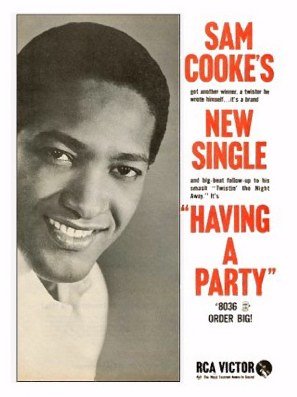
Having A Party

The sound of Sam inventing soul music. How can you not hear the greatness? Is it just me? It can't just be me.

Good Times
Shake

Both songs clearly prefigure high points in 1965-66 era Stones, as well as Otis Redding. Solid big-band R&B.

Twistin' The Night Away
10.

Someday Have Mercy
Directly anticipates early Marvin Gaye songs like "Pride And Joy" and "Hitch Hike," which means it directly anticipates early Velvet Undergound. Yeah, no one wants that.

Ain't That Good News [buy]
Sad Mood
Soothe Me
That's Where It's At

I'm having trouble locating the imperfection. As stated previously, this is the sound and vocabulary of soul music taking shape. This is also what's overlooked when reviewing the career of Sam Cooke. The tragedy is not just that he had some hits, was a pioneer, and died too young. It's that we were also denied his response to the different developments in '60s music upon which he had a direct influence: Motown, Stax, The British Invasion, Dylan, and of course, soul music itself.

Happy birthday, Sam. Hope they're having a party in heaven.

Thursday, January 20, 2011

War at 33 1/3: 1990 Reconsidered

"Those who do not remember the past are condemned to repeat it."

I can't sum up 1990 in a single post without being hopelessly self-indulgent. I'd much rather spread my self-indulgence over the course of a few shorter posts because I'm a purist. So, today I'm concentrating on the politics of 1990 as viewed through its music. Well, that's not quite right. These songs are technically less about politics than about how the business of politics affects everyday people.

That said, 1990 was heavily charged politically. Granted, I was 20-21 and deeply enmeshed in the left-leaning underground radio station (KCSC Chico). Given that environment, a political consciousness would be par for the course. But, I'd say a conflict in the Persian Gulf deservedly rates a notch or two higher on the passionate rhetoric scale. The war was the central issue around which the politics of the day were framed and, in retrospect, the tipping point between Reagan/Bush and Clinton/Bush. And if you think the issues of that era have no bearing on 2011, Jello Biafra has a counterargument.

Jello B-Enemy - Die For Oil Love Jam

spoken word:
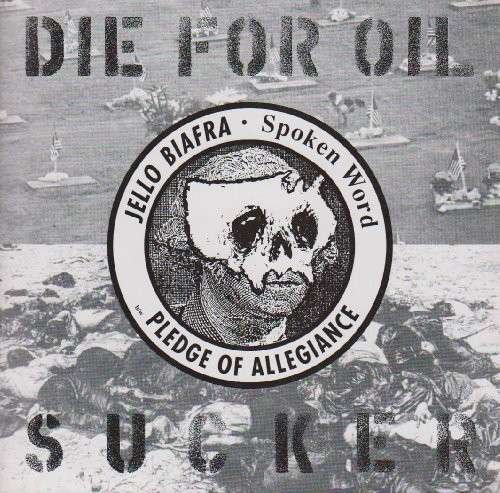
Jello Biafra - Die For Oil, Sucker [buy]

bed music
:
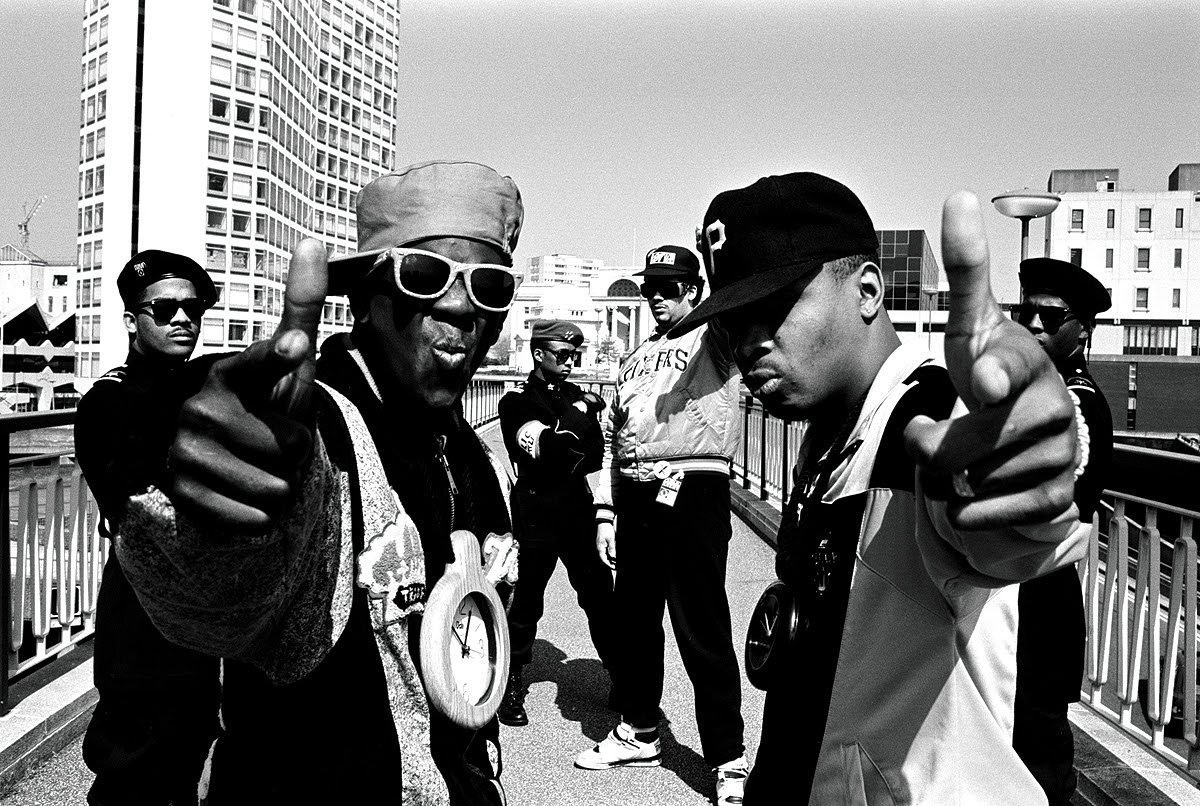
Public Enemy - Contract On The World Love Jam [buy]

"Die For Oil, Sucker" was released as a single in 1991, but it was recorded in November 1990 as a regular part of Biafra's lecture series, which I saw in Chico that October. The piece was his response to the beginning of the Gulf War, a conflict that was then a mere snafu and not the fubar jihad we've come to know and love.

Biafra's strident leftism sounded great to this 21 year old, but his vibrato hysterics are probably best heard in small doses. Don't get me wrong, "Die For Oil, Sucker" is eerily prescient. The content itself has more or less aged well in that he touches upon uncomfortable, but fundamental political truths. But, I'm not putting you through a 9:30 rant, no matter how much of it I agree with. So, I carved out a 2-minute excerpt and married it to the opening track on Public Enemy's Fear Of A Black Planet, the real polemical masterpiece of 1990 (more below).

On a sidenote, can I just say that I'm proud of myself for coming up with "Jello B-Enemy"? Because long before he was Jello Biafra, Bay Area godfather of punk, he was Eric Boucher from Boulder, Colorado. I mention this because in 1990, Eric Bieniemy was an all-American running back for the co-national champion, Colorado Buffaloes, who play their home games in Boulder. When you read a football junkie, you're gonna get football references. And I don't need five downs to make them.

See what I did there?

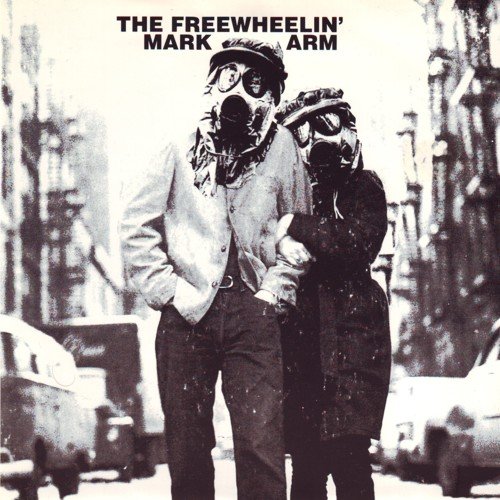
Mark Arm - Masters Of War

"Masters" is the epic third song on The Freewheelin' Bob Dylan (1963) and remains one of his all-time "fingerpointing" classics. It was semi-famously covered by Eddie Vedder for the Bob Dylan: 30th Anniversary Concert Celebration in 1992, but no one bothered to mention that Vedder blatantly ripped off this obscure Mark Arm single released in the summer of '90. I love how Arm's version slowly builds from a folk song to a dissonant, feedback-laden rock anthem that actually anticipates some of his later efforts in Mudhoney. I'm not sure if Arm is the only musician, but I am sure that producer Jack Endino was an inspired choice to bring out the song's inherent bloodletting rawness.

Public Enemy - War At 33 1/3 [buy]

It's hard to overstate Public Enemy's importance in 1990, but from the perspective of 2011, they may as well have been brothers from another planet. They posited themselves as political revolutionaries, but their revolutionary spirit was most fully realized in their musical consciousness.

"Can I live my life without 'em treatin'
Every brother like me like I'm holdin'
A knife alright time to smack Uncle Sam
Don't give a damn, look at the flag
My blood's a flood without credit
Black and close to the edit
I fed it, you read it, just remember who said it."


"War at 33 1/3" is Fear Of A Black Planet writ small, the perfect marriage of Black Panther political rhetoric (Chuck D) and a violent production ethic (the vastly underrated Bomb Squad) that turned the tables (Terminator X) on rap's previous minimalism with an experimental cacophony of awesome. Add to this hints of blaxploitation comedy (Flavor Flav), agitprop musical theater (the S1Ws, PE's videos and live shows), and brilliant, ahead of its time marketing savvy. When it comes to the Public Enemy legacy, believe the hype.


NWA put gangsta rap on the map with Straight Outta Compton (1988), but when Ice Cube went solo in 1990, releasing both the AmeriKKKa's Most Wanted LP (co-produced by the Bomb Squad) and Kill At Will EP, he established himself as the lyrical genius behind the South Central attitude. It didn't help NWA's cause that they released the tepid 100 Miles And Running EP in '90, which had its moments, but paled next to Cube's level-jumping efforts.

Ice Cube - Endangered Species (w/Chuck D) [buy]

If you're putting together a list of post-Chuck Berry songwriters who have the strongest 5-year peak, don't overlook Cube's 1987-92. He didn't have a weakness. Commanding vocal delivery, dope beats, clever samples, and complex narratives that are vulgar, repugnant, and violent, yet articulated with a wit and intelligence that's virtually unmatched.

Uncle Tupelo - Factory Belt [buy]

Uncle Tupelo's debut album, No Depression, was cut in January and released later that June. It's a flawed record, but also strangely perfect in how it fucking rocks and twangs in ideal amounts. Uncle Tupelo was like Creedence if the Fogertys grew up with Minutemen and Dinosaur Jr. instead of Stax and Motown.

"Factory Belt" is one of Jay Farrar's high points in the Tupelo catalog, let alone one of the best songs on No Depression. It wasn't about working in the factory so much as finding an alternative to the factory and the Hüsker Dü-esque machine gun outro ... mad props to drummer Mike Heidorn, by the way ... should be a clue. What do you think Jay's referencing when he sings, "Don't want to go to the grave without a sound/Give the soul a place to rest?" Zombie cinema? Leftist propaganda? I think not. In fact, a comparison to Ice Cube is in order. Yeah, I said Cube.

TUPELO
Well, it's funny how it all works out
Madmen in suits walking about
Like to change their point of view someday
But I feel my patience slipping away

CUBE
I’m a nigga, gotta live by the trigger
How the fuck do you figure
That I can say "Peace" and the gunshots won’t cease?

TUPELO
Well, you do what you can just to get by
With poison all around
It needs no disguise
You can see it on faces
From the barstool to the door
With no equal chance all respect is no more

CUBE
You wanna free Africa, I stare at ya
Cuz we ain’t got it too good in America
I can’t fuck with 'em overseas
My homeboy died over keys of cocaine
It was plain and simple

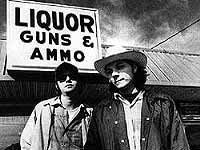
"Factory Belt" and "Endangered Species" are snapshots from America's/AmeriKKKa's underclass, where liquor, guns, and white powder are seen as options (or supplements) to factory drudgery. Sure, it might result in a "9mm to the temple," but for some it beats the slow rot of the factory belt.

Tuesday, January 11, 2011

Your Mouth's a Mile Away

Pixies L-R: Kim Deal, David Lovering, Black Francis, Joey Santiago

Some of you may have read my tribute to 1989 from a couple years back. I've had that post in mind after reading John Roderick's diatribe against the year-end top 10 list, rendered ironically (though appropriately) in top 10 form. He addresses a point I believe in fervently. By its very nature, a 'Best of 2010' cannot account for longevity. I'm confident that I'll love Majesty Shredding and Feral Fire twenty years from now, but who knows? And what about the 2010 records I haven't heard or the ones yet to engage my limbic system? Says Roderick:
"Maybe all the music made in 2010 is total crap! Maybe we should still be trying to make sense of the music that came out in 2008. Maybe we will never truly understand the year 1974. The records released in 2010 are not comparable to each other in any way other than that we haven't had enough time to really listen to any of them."
With that rant in mind, I've decided to follow up my 1989 post with its logical successor, 1990. What can I say? I'm feeling linear and it was a great year for underground music. I know this because I've had 20 years to truly understand MCMXC. Look for the full homage in about a week. In the meantime, a teaser.

"Everything we do is based on the Pixies."
--Kurt Cobain, possibly apocryphal, though believable


1990 was a transition year for Nirvana. They toured behind Bleach, fired their elven drummer, Chad, hired Dave Grohl, and signed with DGC (Geffen). When "Smells Like Teen Spirit" broke the following year, much was made of its similarity to the Pixies and their loudQUIETloud dynamics, an influence Cobain, Grohl, and Krist Novoselic all readily admitted. Unfortunately, that was the extent of the analysis. Nirvana = Pixies, move along, there's nothing to see here. But, how is Nirvana specifically like the Pixies? I'm glad you asked.

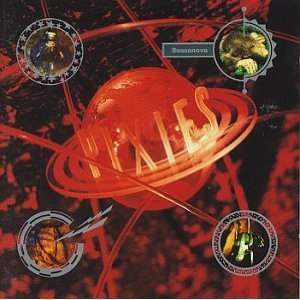
In the summer of 1990, the Pixies released their third album, Bossanova. It's pretty good, maybe even very good, but Gil Norton's production is thin and compressed, the drum sound is terrible, and there's an inescapable feeling of apathy, like a slow leak in a really cool balloon. It didn't help that I saw the Pixies twice in this era (1990, 1991) and both shows were hamstrung by a serious case of Band Don't Give a Fuck.

Divorced from that context, Bossanova is actually a bit underrated, and has several high points. One song in particular jumps out and not for its insidious melody or feather-sledgehammer dynamics.

Pixies intro (:16)

Nirvana intro (:20)

While not identical, the Pixies intro from 1990 clearly anticipates the Nirvana intro from 1991. The biggest difference between the two excerpts is Novoselic's cool bass riff and the fact that one band has Dave Grohl and the other doesn't. Nirvana FTW.

Pixies refrain (:26)

"I like to listen to songs that are simple. I always have. That's the way I write things. So it's memorable, so it sticks in your mind. The only thing I'm aware of is that you have to repeat things over and over."
--Kurt Cobain


Nirvana refrain (:23)

Right away, both Chris and Kurt heard one of their influences in the song ("Teen Spirit"). "The Pixies," says Chris. "Both of us said, 'This really sounds like the Pixies. People are really going to nail us for it.'"
--Michael Azerrad, Come As You Are, p. 176


Pixies - Rock Music [buy]

The inadvertent anthem in its entirety. At the time it probably seemed like a throwaway. In fact, it's one of the few balls-out rockers on Bossanova, so it wasn't like it signaled a trend within the band. And yet, Black Francis' bloodcurdling shriek and the band's undulating dissonance unwittingly foretells a Nirvana Army clad in flannel.